
Rosacea is a chronic skin condition that causes persistent facial redness and sensitivity for many people, but not every rosy cheek is actually rosacea.
True rosacea tends to follow a recognizable pattern on the central face. It often includes visible blood vessels, acne-like bumps, and flushing that does not fade quickly. Heat, alcohol, stress, and certain products commonly trigger flare-ups.
Understanding what rosacea is (and what it is not) helps you choose safer skin care and know when it is time to involve a medical professional or skilled esthetician.
What Is Rosacea?
Rosacea is a long-term inflammatory skin condition that primarily affects the central face.
Rosacea symptoms may include:
- Persistent redness across the cheeks, nose, chin, or forehead
- Visible blood vessels near the surface of the skin
- Flushing that feels hot, uncomfortable, or stinging
- Small red bumps or pus-filled bumps that resemble acne
- Thickening of the skin in advanced cases, often around the nose
- Eye symptoms such as burning, dryness, or a gritty sensation
What Causes Rosacea?
There is no single known cause. Research points to a combination of chronic inflammation, a weakened skin barrier, altered blood vessel response, and heightened sensitivity to environmental triggers. Certain skin microbes may also play a role in some people.
What Does Rosacea Look Like?
Classic rosacea has several common features:
- Redness that stays rather than fading after heat or activity
- Flushing that lingers and returns easily
- Fine visible blood vessels on the cheeks or nose
- Acne-like bumps without blackheads
- A pattern that persists for months or years
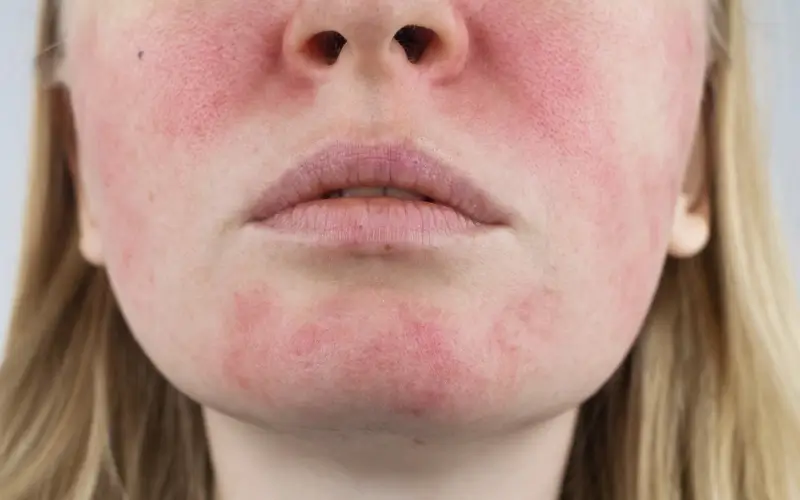
On lighter skin tones, rosacea often resembles a constant sunburn or deep blush. On deeper skin tones, it may appear as warmth, sensitivity, darker patches, or texture changes rather than obvious redness.
Rosy Cheeks Versus Rosacea
Not all facial redness means rosacea.
Temporary flushing can come from:
- Exercise or hot weather
- Strong products, peels, or scrubs
- Hormonal shifts
- Emotional stress
- Fragrance or alcohol in skin care
With simple rosy cheeks, redness fades once the trigger passes. With rosacea, redness tends to persist, flare repeatedly, and may be accompanied by burning, stinging, or bumps that do not behave like typical acne.
If you are unsure, a dermatologist can assess the pattern, symptoms, and history to make a clear diagnosis.
Common Rosacea Triggers
Triggers vary from person to person, but common ones include:
- Sun exposure
- Heat, hot showers, and saunas
- Hot drinks
- Alcohol, especially red wine
- Spicy foods
- Stress and strong emotions
- Intense exercise
- Harsh or fragranced skin care
Keeping a simple diary of food, weather, products, and flares can help you identify your personal triggers. The goal is not to eliminate everything, but to understand what pushes your skin past its comfort zone.
Why Medical Treatment Matters
Rosacea does not respond well to drugstore acne treatments and often worsens when treated like standard breakouts. Over-drying, scrubbing, and aggressive exfoliation typically increase irritation and flushing.
Many clients unknowingly make rosacea worse by trying to “power through” redness with stronger products. This pattern of irritation and rebound inflammation is discussed in more detail in my article about Over-Exfoliated Skin, and it is especially relevant for rosacea-prone skin.
Dermatologists have a broader range of tools that may include:
- Prescription topical medications to reduce inflammation and redness
- Topical or oral medications to control bumps and pustules
- Short courses of oral anti-inflammatory antibiotics when appropriate
- Laser or light-based treatments to address visible blood vessels and persistent redness
These treatments target the underlying biology of rosacea rather than just drying the surface.
A Note About Lasers and Light-Based Treatments for Rosacea
Laser and light-based treatments can be helpful for certain rosacea symptoms, particularly persistent background redness and visible blood vessels. Vascular lasers are designed to target blood vessels and may reduce redness over time when used appropriately.
However, lasers are not a first-line treatment for most people with rosacea and should be considered only after inflammation and barrier health are addressed.
Rosacea-prone skin is often heat-sensitive and barrier-compromised. When laser or IPL treatments are used too early, too aggressively, or during active flushing and inflammation, they can worsen redness, increase sensitivity, and trigger rebound flares.
Most successful rosacea treatment plans follow this progression:
- Calm inflammation first
- Repair and protect the skin barrier
- Reduce daily triggers
- Consider laser treatment only once the skin is stable
Laser treatments work best as part of a comprehensive plan, not as a standalone fix.
Skin Maven Product Support for Rosacea-Prone Skin
Even with appropriate prescriptions, daily habits and product choices make a significant difference. The goal is to calm, protect, and support the skin barrier.
Gentle Cleansing
Choose low-foam, non-stripping cleansers and lukewarm water.
- Calming Cleansing Gel gently cleanses without removing essential lipids or leaving the skin feeling tight.
- Multi-Vitamin Purifying Face Wash offers a light, refreshing cleanse while still supporting barrier health.
Avoid physical scrubs, cleansing brushes, and aggressive exfoliation on active areas.
Hydration and Barrier Repair
Rosacea-prone skin often loses water more easily due to a compromised barrier.
- Maven Hydrating Serum helps restore water balance with lightweight humectant support.
- Rapid Repair Barrier Serum calms inflammation and strengthens the barrier, reducing stinging and burning sensations.
Apply hydration first, then barrier support, and seal with a gentle moisturizer.
For moisture:
- Renewal Moisturizer provides comfortable hydration without fragrance or harsh actives.
Introduce new products one at a time so you can clearly assess your skin’s response.
Daily Sun Protection
UV exposure is a major rosacea trigger.
- Skin Evolved Mineral 40 Moisturizing SPF provides broad-spectrum mineral protection while supporting daily moisture.
Apply every morning and reapply with outdoor exposure. Hats and shade also help reduce flares.
Lifestyle Support for Rosacea
Alongside skincare, lifestyle adjustments can reduce flare frequency and intensity:
- Use lukewarm water instead of hot
- Protect skin from wind and temperature extremes
- Moderate known food triggers
- Incorporate stress-management tools such as gentle movement, breathing, or calming routines
The goal is progress, not perfection.
When to See a Doctor
Consider medical care if:
- Redness lasts longer than a few months
- Visible blood vessels or bumps persist despite gentle care
- Eye irritation or dryness develops
- Your skin affects your confidence or quality of life
Rosacea is common, manageable, and not something you need to navigate alone. If you are unsure where to start, a gentle Skin Maven routine can support your skin while you explore whether prescription care or in-office treatments are appropriate. Virtual Skincare Coaching or an in-studio visit can help you fine-tune a plan that respects your skin’s limits.