

If you’ve noticed new weight settling around your middle during perimenopause or menopause—even though you eat and move the same way—you’re not alone and you’re not broken. This isn’t a willpower problem. It’s a predictable biological shift.
During midlife, hormones change how your body stores fat, regulates blood sugar, responds to stress, and repairs tissue. One of the biggest changes is an increase in visceral fat—the metabolically active fat that sits around the organs. This type of fat releases inflammatory signals that affect not just the heart and metabolism, but also the skin.
This article explains why menopause changes body composition, how inflammation shows up on your face, and what realistic, pro-aging strategies actually help.
Why Menopause Changes Body Composition
Several shifts happen at once during perimenopause and menopause.
Estrogen decline affects insulin sensitivity.
Lower estrogen makes the body less efficient at handling carbohydrates. This increases fat storage and makes fat loss harder, even when eating and exercise habits stay the same.
Sleep disruption alters hunger and stress hormones.
Night sweats, early waking, and lighter sleep raise cortisol and appetite signals. This can drive cravings, late-night eating, and blood sugar swings that weren’t an issue before.
Muscle loss accelerates without active protection.
Muscle is a metabolic organ. As estrogen drops, muscle is easier to lose and harder to rebuild. Less muscle means a slower resting metabolism and reduced insulin sensitivity.
Visceral fat increases.
Visceral fat is more inflammatory than subcutaneous fat. You may notice your waistline changing before the scale moves. This fat actively contributes to inflammation throughout the body.
You can be doing many things “right” and still see your shape change. That doesn’t mean you’ve failed. It means the rules have changed.
How Metabolic Changes and Inflammation Affect Skin
The same processes that drive midsection weight gain also influence skin behavior.
You may notice:
- Increased redness, flushing, or reactivity
- Pigment that darkens more easily with heat or sun
- Breakouts along the chin and jaw during perimenopause
- Slower healing and lingering marks after acne or irritation
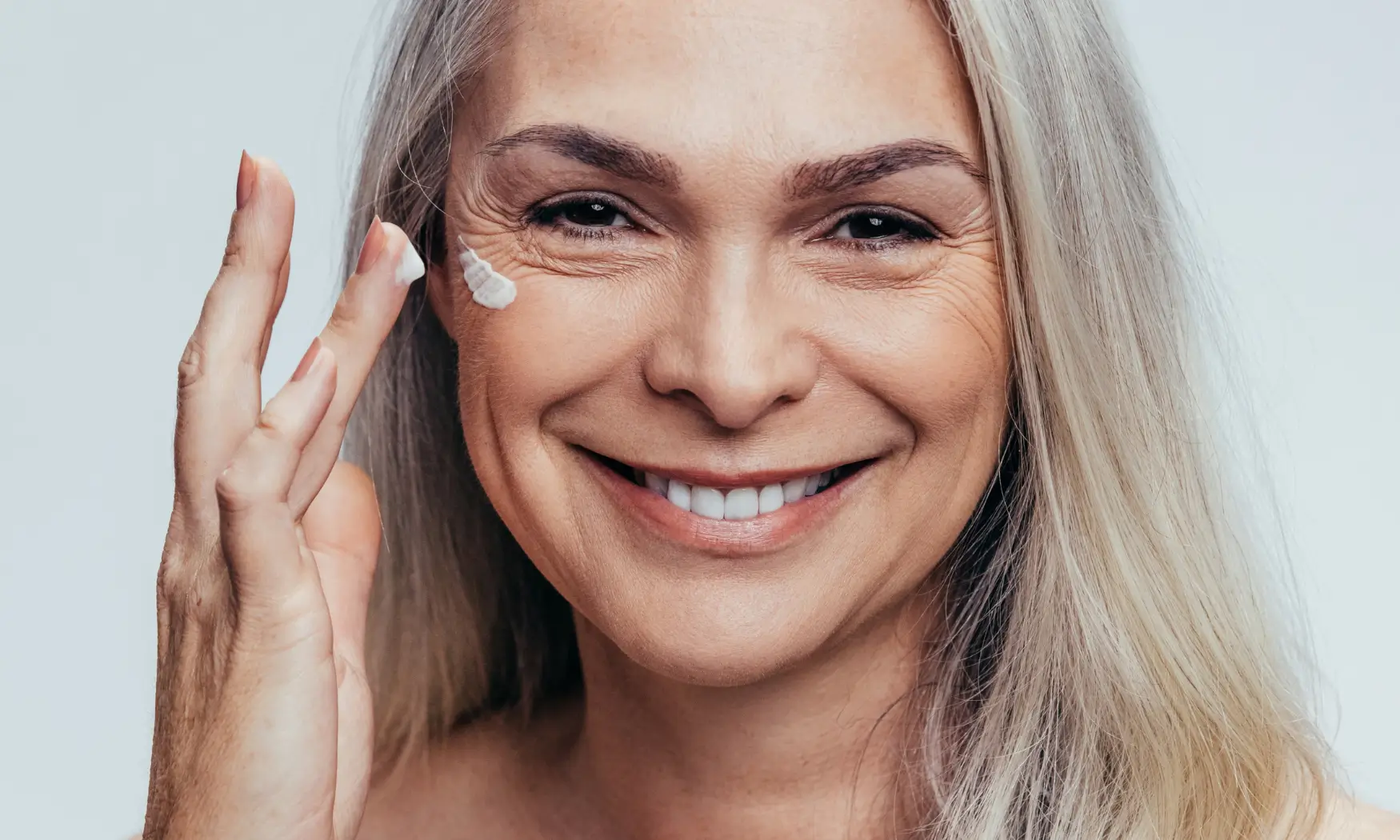
- Duller tone and reduced firmness
- Skin that feels dry yet congested at the same time
This isn’t vanity. It’s visible physiology. Sleep quality, inflammation, hormones, and circulation all affect how skin repairs itself.
The Goal Is Stability, Not Restriction
Menopause nutrition is not about eating less. It’s about stabilizing blood sugar, protecting muscle, and lowering inflammation.
Helpful patterns include:
Protein at every meal.
Protein supports muscle, satiety, and steady blood sugar. Skin also needs amino acids to rebuild collagen and barrier function.
Fiber daily.
Vegetables, beans, berries, and whole grains support gut health, hormone metabolism, and inflammation control.
Anti-inflammatory fats.
Olive oil, avocado, nuts, seeds, and omega-3 rich fish support metabolic health and skin barrier integrity.
Lower-glycemic carbohydrates most of the time.
Oats, quinoa, lentils, beans, and root vegetables are generally better tolerated than refined grains and sugary snacks.
Alcohol matters more in midlife.
Alcohol can worsen sleep, hot flashes, inflammation, rosacea, and pigment. Reducing intake often improves skin faster than adding another product.
Strength Training Is a Skin Strategy
Strength training is one of the most overlooked tools for menopause skin health.
Protecting muscle helps:
- Improve insulin sensitivity
- Reduce visceral fat over time
- Support posture and facial “drape”
- Improve circulation
- Lower chronic inflammation
Aim for two to three strength sessions per week, plus walking or low-impact cardio for heart, brain, and mood support. This combination benefits both metabolism and skin.
Skincare When Inflammation Is Higher
When inflammation rises, skin usually tolerates less. This is the season for smarter skincare, not harsher skincare.
Priorities include:
Barrier first.
Gentle cleansing and consistent moisturizing matter more than aggressive products when skin feels tight, stingy, or reactive.
Daily antioxidants.
Antioxidants support blood vessels, protect collagen, and help stabilize pigment—especially when heat and inflammation are triggers.
Patient pigment care.
Menopause skin triggers pigment more easily and clears it more slowly. Gentle brightening plus consistent mineral SPF works better than strong peels.
Collagen support without trauma.
Peptides and growth factors support firmness and texture without provoking sensitivity or overheating the skin.
In-studio, this often means treatments focused on calming, circulation support, barrier repair, and gradual collagen building rather than aggressive resurfacing.
What About GLP-1 Medications?
You may hear a lot about GLP-1 medications for weight loss. These prescription therapies can be helpful for some women, particularly when insulin resistance or metabolic syndrome is part of the picture.
From a skin perspective, a few realities matter:
- Rapid weight loss can change facial volume and make laxity more noticeable. Prepare your skin with Collagen Firming Treatments
- Reduced appetite may lower protein intake, affecting muscle, collagen, and hair if not managed intentionally. Hair loss is generally from rapid weight loss and can begin 6 months into treatments. The Juvasonic Treatment helps strengthen the follicles in Scalp & Hair Restoration as it boosts hair restoration results by delivering exosomes and PRP deeper into the scalp.Needle‑Free & Painless – Completely non‑invasive; no anaesthetic required. Plan for roughly three to six sessions to achieve optimal hair‑restoration results.
- Hydration and barrier support often become more important during major metabolic shifts
This is not a decision to make based on social media trends. If you’re curious, it belongs in a conversation with a qualified medical provider. If used, skin and muscle support should be proactive.
You Deserve Compassion, Not Criticism
Menopause-related weight and shape changes aren’t a moral issue. They are biology. You still have agency, but you are not starting from the same hormonal playing field you had at 30.
The goal is not to chase an old version of yourself. It’s to build strength, stability, and routines that support your current body so you can move through the next decades with energy and confidence.
If you want help translating all of this into a realistic plan—metabolism-aware skincare, inflammation support, pigment strategy, and treatments that respect your nervous system and your skin—I’m here.
Contact me NOW to schedule an online skin consult or to meet me in-person in my Los Gatos skin studio! In a Skin Maven consultation, we look at the whole picture and build a skincare routine that’s grounded, supportive, and actually doable.