
Hormone replacement therapy (HRT) can be life-changing for many women in perimenopause and postmenopause. It may improve sleep, reduce hot flashes, stabilize mood, and support bone, brain, and cardiovascular health.
From a skin perspective, HRT matters, but it is not magic.
This article explains how hormone therapy influences the skin, what it can realistically improve, what it cannot fix, and how to pair HRT with smart skincare and effective facial treatments for the best long-term results.
This content is educational only and not medical advice. Decisions about hormone therapy should always be made with a licensed, menopause-informed medical provider.
Why Hormones Matter to Skin
Skin is a hormone-responsive organ. Estrogen, progesterone, and testosterone all influence how skin holds water, builds structure, repairs damage, and responds to heat and inflammation.
When hormone levels shift during menopause, skin changes are not cosmetic accidents, they are biological responses.
Clinicians such as Dr. Mary Claire Haver have helped modernize menopause care by reframing hormone therapy as a health discussion rather than a fear-based one. Understanding what hormones actually do allows for clearer expectations — especially when it comes to skin.
What Estrogen Does for Skin
Estrogen plays a central role in skin health. In the skin, estrogen:
- Stimulates collagen and elastin production
- Supports hyaluronic acid and natural hydration
- Helps maintain skin thickness and resilience
- Supports blood flow and vascular stability
- Influences pigment cells and their response to heat and light
As estrogen declines:
- Collagen loss accelerates
- Skin becomes thinner and drier
- Elasticity decreases
- Fine lines deepen and texture becomes crepey
- Pigment and redness may become more noticeable
This is why skin can appear to change quickly during menopause, even when lifestyle habits remain the same.
Progesterone and Testosterone: Supporting Roles
Progesterone
Progesterone helps balance estrogen and supports the nervous system calm and sleep. When ovulation becomes irregular and progesterone declines, skin may feel more reactive, and disrupted sleep can interfere with overnight repair.
Testosterone
Testosterone supports muscle tone, bone density, and vitality. In skin, it influences oil production and thickness. Too little may contribute to dryness and fragility; too much can provoke acne or unwanted hair growth. Any testosterone therapy must be carefully monitored.
What HRT Can Do for Skin
When initiated at the right time and appropriately prescribed, systemic hormone therapy may:
- Slow collagen loss and support skin thickness
- Improve hydration from within
- Support better sleep, allowing skin to repair overnight
- Reduce hot flashes and night sweats that worsen redness and pigment
- Support muscle and bone, which indirectly affect how skin drapes on the face and body
Many women report that skin feels less papery, less dull, and more resilient over time while on HRT.
What HRT Cannot Do
HRT is not a surface treatment.
It cannot:
- Reverse deep wrinkles formed over decades
- Replace lost facial fat pads or bone
- Erase existing sun damage or advanced pigment on its own
- Substitute for sunscreen or skincare
Think of HRT as internal support, not a cosmetic shortcut. It improves the environment your skin lives in — it does not replace topical care or professional treatments.
Types of Hormone Therapy: Skin-Relevant Considerations
Specific hormone choices are medical decisions, but from a skin and safety perspective, it helps to understand the landscape:
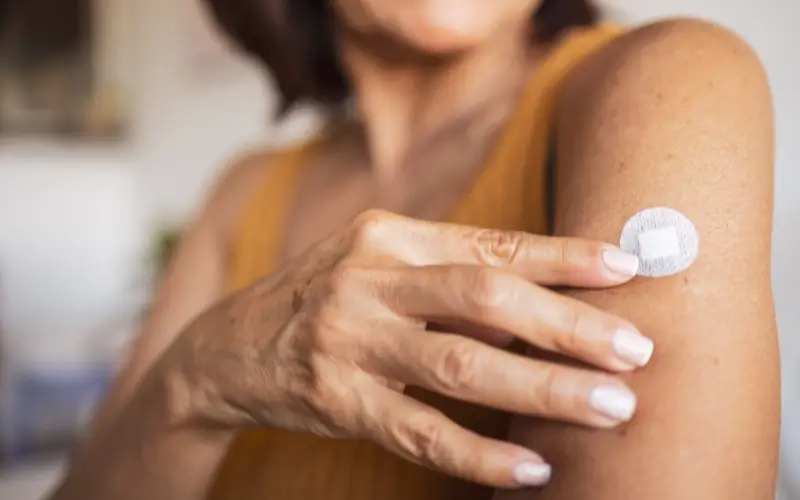
- Transdermal estrogen (patches, gels, sprays) bypasses the liver and is often preferred by menopause specialists due to a more favorable clot-risk profile
- Oral estrogen may still be appropriate for some women but requires individualized cardiovascular risk assessment
- Micronized progesterone is commonly used when a uterus is present and may also support sleep
- Local vaginal estrogen targets vaginal and urinary tissues directly and has a different risk profile than systemic therapy
- Testosterone therapy may be used in select cases under specialist care and must be monitored due to skin and hair effects
All hormone therapy should be individualized and revisited over time.
How to Pair HRT with Skincare
Whether or not you use hormone therapy, your skin still requires targeted external support. If you do use HRT, skincare helps protect and amplify those internal benefits.
Key pillars include:
Barrier care
Gentle cleansing and barrier-supportive moisturizers help stabilize thinning, reactive skin.
Hydration
Dedicated hydrating serums restore comfort and plumpness.
Collagen support
Peptide and growth-factor serums support firmness and texture as estrogen declines.
Antioxidant protection
Daily antioxidants help protect collagen, calm inflammation, and support pigment control.
Sun protection
Consistent mineral SPF is essential to protect against UVA, UVB, and visible light that drive aging and pigment.
Professional treatments — including firming facials, microcurrent, and non-traumatic infusion technologies — can be safely customized for women on or off HRT.
If You Cannot or Choose Not to Use HRT
Not every woman can use hormone therapy, and some choose not to. You still deserve comfort, support, and healthy skin.
In those cases, the focus shifts to:
- Lifestyle strategies that support sleep, metabolism, and mood
- Non-hormonal options for vasomotor symptoms when appropriate
- Local vaginal therapies if needed
- Pro-aging topical routines and in-studio treatments that respect sensitive skin
With consistency and the right approach, skin can improve significantly even without hormone therapy.
When to Ask for Help
If you feel overwhelmed by conflicting information, a menopause-informed clinician can help guide medical decisions. As a skin specialist, my role is to translate hormonal changes into realistic, sustainable skin strategies.
During an in-person or online Skin Maven skin consultation, we look at where you are in your menopause journey, what therapies you are using or considering, and how your skin is responding. From there, we build a pro-aging, menopause-aware routine that fits your real life.