
B vitamins are involved in energy production, nervous system health, hormone balance and cell repair. All of those systems influence your skin. In the right amounts, B vitamins support healthy barrier function, wound healing and stress resilience. In very high doses or in the wrong forms, certain B vitamins may contribute to breakouts for some people.
This article is educational and is not medical advice. Always talk with your licensed health provider before starting, stopping or changing supplements, especially if you have medical conditions, take prescription medication or are pregnant or breastfeeding.
Understanding Vitamin Dosage Terms
Supplement labels can be confusing because they use different units.
A few basics help:
- Gram (g) is a base unit of weight.
- Milligram (mg) is one thousandth of a gram.
- Microgram (mcg) is one thousandth of a milligram.
- 1 mg equals 1,000 mcg.
More is not always better with vitamins. Many B vitamins are needed in tiny amounts. Going far above the Recommended Dietary Allowance (RDA) can be unnecessary or even create new problems, including skin changes.
B Complex Versus Single B Vitamins
Some people take a balanced B complex that contains modest amounts of each B vitamin. Others take individual B vitamins in higher amounts for specific goals such as mood, stress or energy.
From an acne perspective, very high doses of certain B vitamins — especially B6, B12 and biotin — are more likely to be linked with breakouts than a standard dose B complex. If you notice new or worsened acne after starting a supplement, it is worth reviewing the label with your health provider.
B1 (Thiamine): Stress and Skin Recovery
Thiamine helps your body turn carbohydrates into energy. It also supports the nervous system and healthy immune function, which indirectly helps your skin cope with stress.
- Skin connection: Supports overall resilience and wound healing.
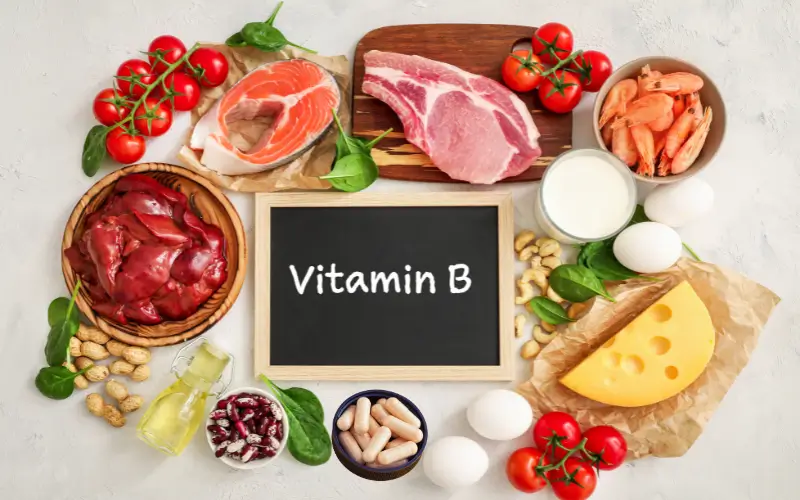
- Food sources: Whole and fortified grains, legumes, sunflower seeds, pork, mussels.
B2 (Riboflavin): Cell Turnover and Oil Balance
Riboflavin supports normal cell turnover and collagen maintenance. It also plays a role in reducing oxidative stress and can support healthy mucous membranes, including those in the skin.
- Skin connection: Helps repair surface damage and may support balanced oil flow.
- Food sources: Dairy products, mushrooms, leafy greens, almonds, seaweed.
B3 (Niacin / Niacinamide): Redness, Texture and Pigment
Vitamin B3 comes in different forms. Niacin is often used orally, while niacinamide is popular in topical skincare. Niacinamide is known for supporting barrier function, calming redness, improving fine lines and helping with uneven pigment.
- Skin connection: Helps calm irritation and supports a stronger, smoother barrier.
- Food sources: Poultry, fish, dairy, mushrooms, peas, fortified breads and cereals.
B5 (Pantothenic Acid): Oil Production and Stress Support
Pantothenic acid is needed to make coenzyme A, which is involved in fatty acid metabolism and stress hormone production. Some practitioners use B5 to support healthy oil balance in the skin, although high dose protocols should only be done under medical supervision.
- Skin connection: Helps with moisture retention and may influence sebum production.
- Food sources: Avocado, mushrooms, broccoli, lentils, chicken, turkey, sweet potatoes.
B6 (Pyridoxine): Mood, Sleep and Hormonal Fluctuations
Vitamin B6 is involved in making neurotransmitters like serotonin and melatonin and plays a role in hormone metabolism. Because stress and poor sleep can worsen acne, adequate B6 helps indirectly by supporting a calmer mood and better rest.
Very large doses of B6 supplements, far above the RDA, have been associated in some reports with increased oil production and acne in susceptible people. Staying close to recommended amounts and avoiding long term mega doses unless supervised by a medical professional is a safer approach.
- Skin connection: Indirectly supports acne by influencing stress, sleep and hormone balance.
- Food sources: Poultry, fish, potatoes, sunflower seeds, bananas, spinach.
B7 (Biotin): Hair, Nails and Its Relationship With B5
Biotin is marketed heavily for stronger hair and nails. It also plays a role in fatty acid metabolism and healthy nerve function. True biotin deficiency is rare in people who eat a varied diet.
Some people notice more breakouts after starting high dose biotin supplements. One possible reason is that biotin and vitamin B5 share absorption pathways in the gut. Very large doses of biotin may crowd out B5, which some practitioners consider important for balanced oil production. That does not mean biotin always causes acne, but it may be wise to avoid mega doses unless there is a clear medical reason to use them.
- Skin connection: Supports barrier function, hair and nail strength, but very high doses may disrupt B5 balance.
- Food sources: Eggs, almonds, walnuts, onions, sweet potatoes, tomatoes, whole grains.
B9 (Folate / Folic Acid): Cell Renewal and Antioxidant Support
Folate is essential for DNA synthesis and cell division. It helps tissues renew, supports pregnancy and contributes antioxidant support against free radical damage.
- Skin connection: Supports healthy cell turnover and repair, which is important in post acne recovery.
- Food sources: Dark leafy greens, beans, lentils, asparagus, broccoli, citrus fruits.
B12 (Cobalamin): Energy, Nerves and a Possible Acne Link
Vitamin B12 is needed for red blood cell formation, nerve health and DNA synthesis. It appears mainly in animal foods and fortified products, so vegans and some vegetarians are often advised to supplement.
A small body of research suggests that high dose B12 supplements may change how skin bacteria behave in certain people and can trigger acne-like eruptions. Not everyone is sensitive, but if you started a B12 supplement and then developed new breakouts, it is worth discussing timing and dosing with your health provider.
- Skin connection: Essential for repair and nerve health, but high doses may aggravate acne in a subset of people.
- Food sources: Meat, fish, eggs, dairy and fortified plant milks or nutritional yeast.
Food First, Then Thoughtful Supplement Use
For most people, a balanced diet gives a strong foundation of B vitamins without the risk of mega dosing. Whole foods bring additional benefits such as fiber, phytonutrients and protective antioxidants that supplements alone cannot provide.
Supplements can be helpful to fill true gaps, but more is not always better. Stacking a multivitamin, energy drink, B complex and separate high dose biotin or B12 can quickly push you far beyond what your body needs.
Practical Tips If You Have Acne and Take B Vitamins
- Gather all of your supplements and check labels for B6, biotin and B12 content.
- Avoid layering multiple products that each contain high doses of the same B vitamin.
- Work with your doctor before making big changes, especially if supplements were prescribed.
- Track your skin for six to eight weeks after simplifying or adjusting supplements.
- Pair supplement changes with consistent, acne appropriate skincare — not harsh stripping routines.
When To Ask For Professional Help
If you have cleaned up your skincare, hair products and makeup, but still suspect supplements or nutrition might be affecting your breakouts, it may be time to invest in some one on one guidance with an esthetician who specializes in acne treatment, like The Skin Maven! Acne has many contributing factors, including hormones, stress, sleep, medications and genetics. Sorting through all of that alone can feel overwhelming.
That’s why I offer in-person and virtual acne consults.
During an acne focused consultation, we review your acne skincare products, lifestyle patterns and current supplements and create a realistic plan that supports clearer, calmer skin over time. You deserve support that looks at the whole picture, not just another harsh product.