
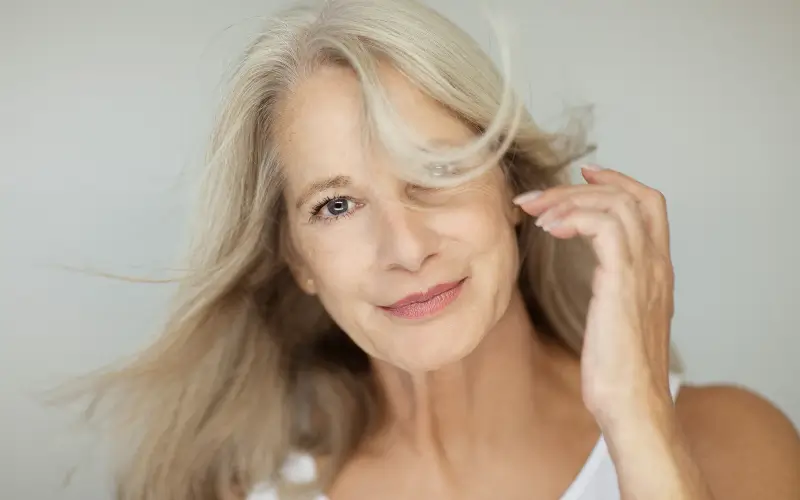
Menopause skin changes happen because estrogen levels fall and remain low. Estrogen plays a central role in maintaining hydration, collagen, elasticity, circulation, and barrier strength. When it declines, skin does not suddenly “fail.” It simply begins to behave differently and requires a different type of support.
This article focuses specifically on how menopause affects the skin and what helps it function well during this stage. If you are looking for a broader overview of menopause or the early transition years, start with perimenopause-focused education. If your concern is what you see and feel in the mirror, you are in the right place.
Why Menopause Changes the Skin
During menopause and postmenopause, estrogen remains consistently low.
As a result:
- Collagen production slows significantly
- Elastin fibers become less organized and more fragile
- Hyaluronic acid and natural moisturizing factors decline
- The lipid barrier thins and loses efficiency
- Blood flow patterns shift, making small vessels more visible
On the surface, these changes often show up as:
- Dry or tight skin that absorbs product but still feels uncomfortable
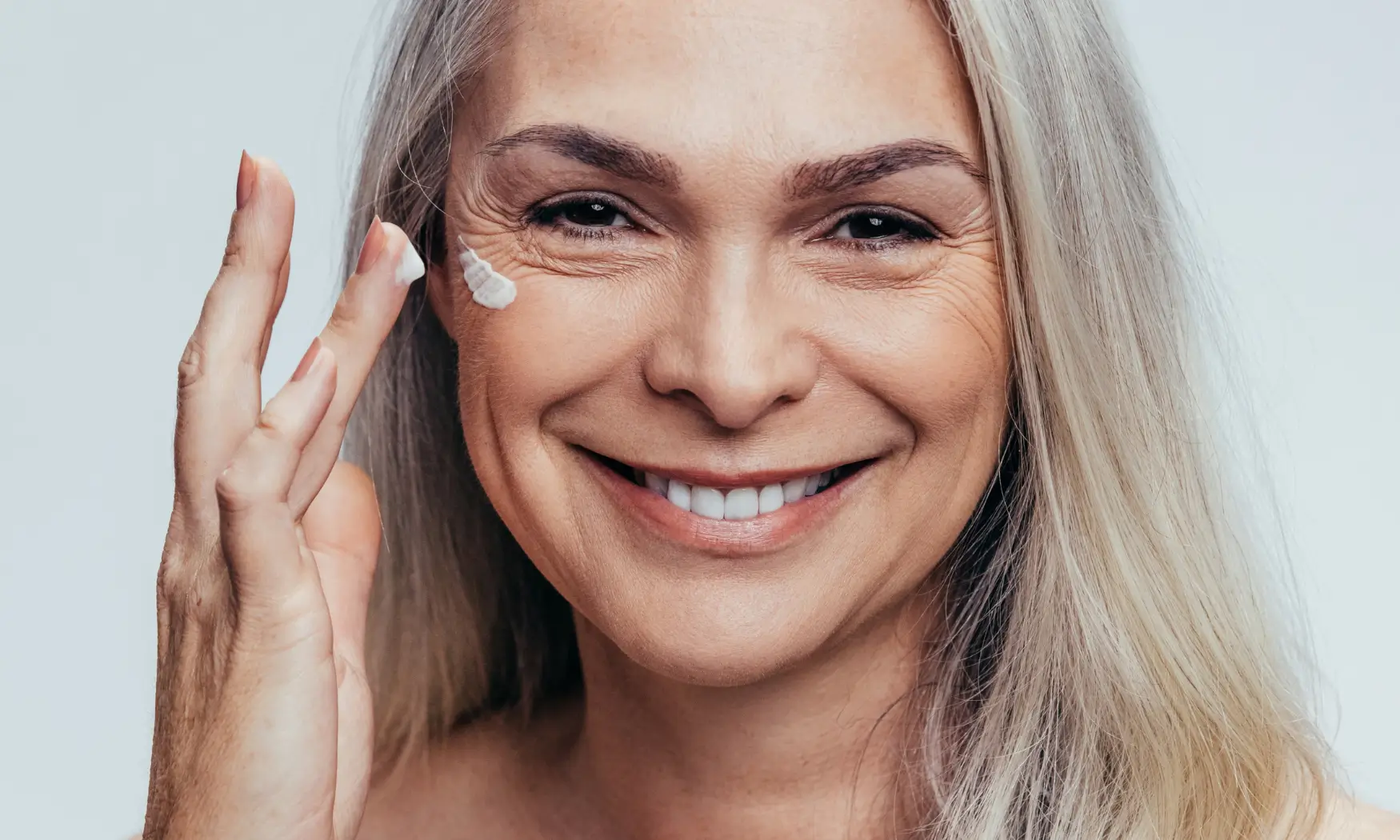
- Crepey texture around the eyes, neck, and chest
- Dullness or a flatter overall tone
- Increased redness or flushing
- Slower healing after irritation or procedures
- More noticeable pigmentation or dark patches
Menopause is a whole-body transition. Skin changes are not isolated cosmetic issues: they reflect deeper shifts in hormones, circulation, sleep quality, and metabolism.
What Menopause Skin Needs Most
Menopause skin is not fragile glass. It is responsive tissue that improves when supported correctly. The goal is strength, comfort, and resilience, not aggressive correction.
The most helpful categories of menopause skincare ingredients include:
Peptides
Peptides support collagen and elastin signaling and help reinforce structure without irritating the skin. They are well suited for daily use in menopause because they encourage repair without relying on harsh exfoliation.
Growth Factors
Growth factors help guide tissue repair and renewal. With consistent use, they can improve texture, softness, and overall skin quality. They are especially helpful when paired with lipid-rich moisturizers for skin that feels thin or depleted.
Antioxidants
Antioxidants protect collagen and blood vessels from free-radical damage and help calm inflammation that contributes to redness and pigment. Multi-antioxidant formulas with ingredients such as niacinamide are particularly useful for menopause skin.
Barrier-Supportive Hydration
Humectants such as glycerin and hyaluronic acid draw water into the skin. Barrier lipids such as ceramides and fatty acids help keep that water in place. Menopause skin almost always needs both.
Barrier Care Is Non-Negotiable
As estrogen declines, the outermost layer of the skin becomes thinner and more reactive. A compromised barrier makes every other concern worse — dryness, sensitivity, redness, pigment, and poor treatment tolerance.
Barrier support means:
- Using gentle, non-stripping cleansers
- Avoiding very hot water
- Limiting harsh scrubs and frequent strong acid peels
- Layering hydration under moisturizer
- Choosing barrier-supportive creams instead of relying on actives alone
When the barrier is stable, skin tolerates peptides, growth factors, and brightening ingredients far more effectively. Learn how to repair your skin barrier here!
Eyes, Neck, and Often-Forgotten Areas
The eye area contains thinner skin and fewer oil glands, which is why menopause changes often appear there first. Hydration, peptides, and barrier support are essential.
The neck, chest, and back of the neck are also commonly neglected despite daily sun exposure. Applying the same supportive products used on the face — including sunscreen — helps maintain firmness and clarity over time.
Pigment, Heat, and Melasma During Menopause
Heat is a major pigment trigger. Menopause can make blood vessels and pigment cells more reactive, which is why melasma and dark patches often worsen during this stage.
Helpful daily strategies include:
- Antioxidants to calm inflammation
- Targeted brightening ingredients when appropriate
- Consistent mineral sunscreen to protect against UVA, UVB, and visible light
- Hats, shade, and heat awareness during peak sun hours
Avoiding excessive heat matters just as much as what you apply topically.
Lasers and Menopause Skin: Helpful Tool or Too Much Too Soon?
Laser and light-based treatments can be useful in midlife skin, but timing and skin readiness matter more than the name of the device. Menopause skin is often drier, more reactive, and slower to recover, which means aggressive treatments can trigger prolonged inflammation — and inflammation can worsen redness and pigmentation.
When Lasers May Be Appropriate
- The skin barrier is stable, without ongoing stinging or burning
- Redness and inflammation are under control
- Skin is well hydrated and recovering normally after mild treatments
- Expectations are realistic and treatments are spaced conservatively
Used thoughtfully, energy-based treatments can support texture, firmness, and certain types of pigment.
When Lasers Can Backfire
- The barrier is compromised or sensitized
- The skin is melasma-prone or heat-reactive
- Flushing is frequent or inflammation is persistent
- Strong actives and aggressive treatments are layered together
In menopause, the safest strategy is usually to build skin strength first, then consider energy-based procedures once the skin is calm and resilient.
The Smarter Laser Protocol
- Repair the barrier and improve hydration
- Calm inflammation and reduce triggers
- Support collagen gradually with well-tolerated ingredients and treatments
- Consider lasers only when the skin is stable enough to handle them
Lasers are a tool, not the foundation. When skin health leads, results are more predictable and setbacks are fewer.
A Simple Day-to-Day Approach
A menopause-friendly routine emphasizes consistency and comfort over complexity.
Morning
- Gentle cleanse
- Hydration and antioxidant support
- Peptide or growth factor serum if tolerated
- Barrier-supportive moisturizer
- Mineral sunscreen as the final step
Evening
- Thorough but gentle cleansing
- Repair-focused serums
- Moisturizer suited to dryness and sensitivity
- An overnight mask a few nights per week if needed
Weekly
- Gentle enzyme exfoliation only when skin is calm
- In-studio treatments focused on circulation, collagen support, and barrier repair
Menopause Is a Shift, Not a Decline
Menopause is not a punishment. It is a biological shift that requires a new strategy.
With the right support, skin can remain strong, comfortable, and healthy for decades after menopause. The key is understanding what changed and responding thoughtfully instead of chasing trends or aggressive fixes.
If you feel overwhelmed or unsure where to start, menopause-aware skin coaching with The Skin Maven or in-studio care at our Los Gatos location can help you build a plan that respects your skin, your hormones, and your real life. Contact me now to get started! I have 20+ years of experience in menopause skincare and I’ve been through exactly what you’re going through.