

Perimenopause is the transition phase leading up to menopause, and for many women it is the most confusing and disruptive part of the journey.
This article focuses specifically on perimenopause—the years when hormone signals become unpredictable and symptoms often appear before periods stop. If you are looking for a big-picture explanation of menopause overall, start with Menopause Is Not Just a Women’s Issue. If things suddenly feel “off” and you can’t connect the dots, you’re in the right place.
Perimenopause can last four to ten years. Periods may still show up. Hormone levels swing. Symptoms evolve. Many women are told, “You’re still getting a period, so this can’t be perimenopause.”
That is simply not true.
Why Perimenopause Feels So Chaotic
Clinicians such as Dr. Mary Claire Haver describe perimenopause as the phase when the brain and ovaries stop working together in the smooth, predictable rhythm you were used to.
The command centers in the brain send stronger, more urgent signals. The ovaries respond inconsistently.
The result often feels like a roller coaster, not a gentle slope.
This is why symptoms often cluster, overlap, and feel hard to explain—especially early on.
When Perimenopause Typically Begins
Perimenopause often starts in the late thirties or forties, but there is no clear starting line. Most women recognize it only in hindsight.
Early clues can include:
- Periods that become slightly shorter or longer
- Heavier or lighter bleeding than usual
- New or intensified PMS, especially irritability or anxiety
- Waking around 3 a.m. without a clear reason
- Feeling wired but exhausted
- New sensitivity to alcohol or caffeine
These changes are often dismissed as stress or aging. In reality, they reflect early hormonal shifts.
Common Perimenopause Symptoms
As estrogen and progesterone spike and crash rather than glide smoothly, multiple systems are affected at once.
Common perimenopause symptoms include:
- Hot flashes or night sweats
- Mood swings, anxiety, or low mood
- Brain fog or difficulty concentrating
- Palpitations or racing heart at night
- Increased headaches or migraines
- Weight gain around the midsection
- Joint aches or muscle stiffness
- Changes in libido
- Vaginal dryness or discomfort
How Skin Often Joins the Conversation
Skin changes are often one of the first visible signs:
- New adult acne along the chin and jaw
- Increased sensitivity and flushing
- Dry, tight, or itchy skin
- Worsening melasma or pigmentation
If everything feels “off” at once and you can’t connect the dots, perimenopause is often the missing piece.
What Is Actually Happening With Hormones
During perimenopause:
- Ovulation becomes less reliable
- Progesterone fluctuates and then trends downward
- Estrogen may swing from very high to very low within short windows
- Testosterone continues its gradual age-related decline
These shifts influence:
- Brain chemistry and mood
- Sleep quality and circadian rhythm
- Appetite and blood sugar regulation
- Heat regulation in the hypothalamus
- Collagen production, elasticity, and hydration in the skin
This is why symptoms often affect both body and mind at the same time.
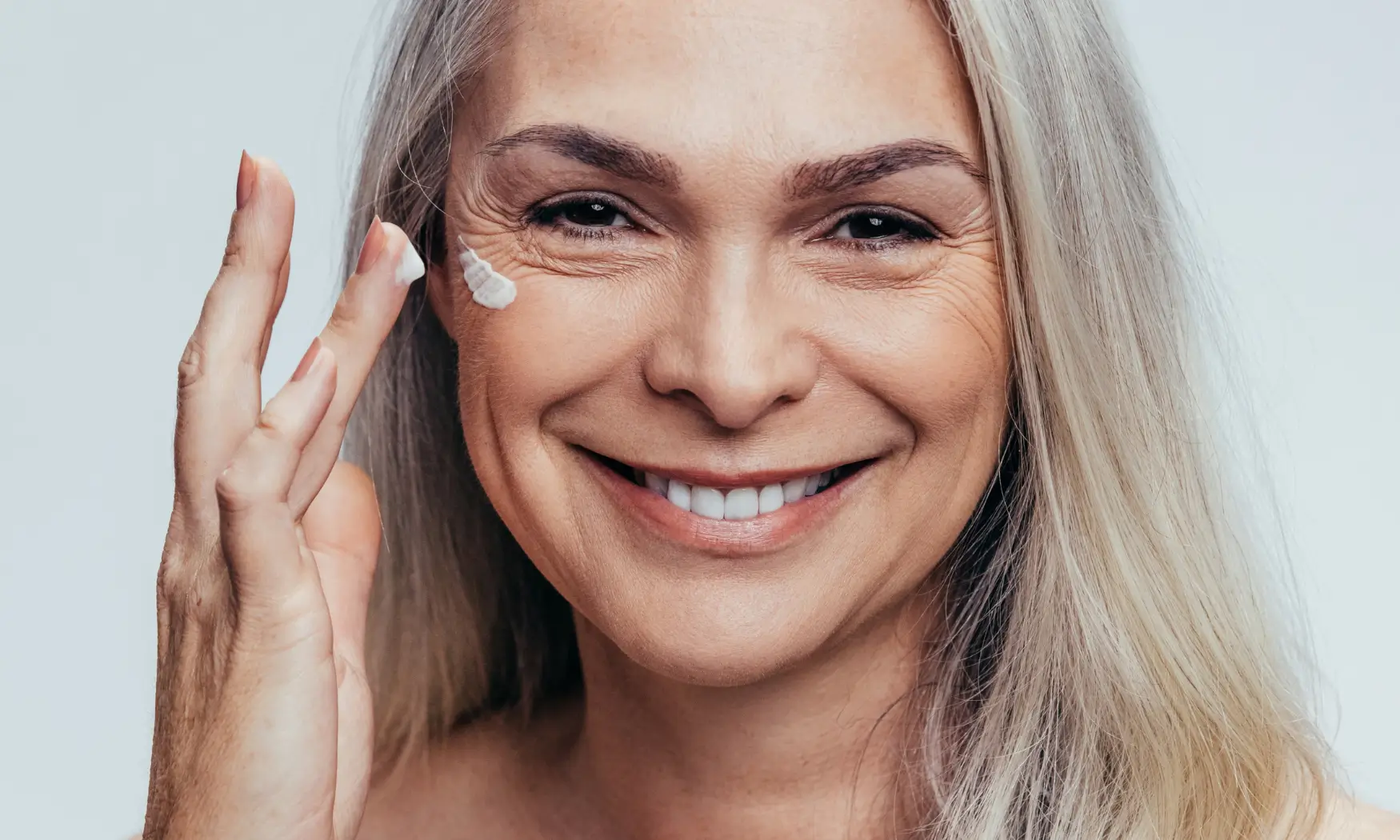
How Perimenopause Affects the Skin
Skin is a hormone-sensitive organ. As hormonal signals fluctuate, skin behavior often changes quickly.
Common perimenopause skin patterns include:
- Acne flares even without a teenage history
- Congestion around the chin, jawline, and neck
- Oilier T-zone with drier cheeks
- Sudden sensitivity to products that once worked well
- New redness, flushing, or visible capillaries
- Pigment that darkens with heat or sun
At this stage, old routines often stop working. Strong exfoliants may irritate. Heavy creams may clog. The solution is not stripping the skin, but adapting to changing skin barrier and collagen needs.
(For a deeper dive, see Menopause Skin Changes Explained.)
What Actually Helps During Perimenopause
Perimenopause requires a layered, realistic approach. There is no single supplement, cream, or protocol that fixes everything.
1. Track Symptoms and Cycles
Use a simple journal or app. Track sleep, mood, bleeding patterns, hot flashes, and skin changes. This information helps you and your clinician see patterns over time.
2. Find a Menopause-Informed Provider
Look for clinicians with specific training in midlife health and current menopause guidelines. Educational resources from experts like Dr. Haver can help guide those conversations.
3. Ask About Treatment Options
Support may include lifestyle changes and, when appropriate, hormone therapy. Decisions depend on age, symptoms, medical history, and personal risk. A blanket “you’re too young” is not a complete evaluation.
4. Support Skin Barrier and Collagen
From a Skin Maven perspective, this is a critical window to:
- Use a gentle, non-stripping cleanser
- Add layered hydration to counter new dryness
- Support collagen with peptide and growth factor serums
- Repair the barrier with targeted moisturizers
- Use daily mineral SPF to protect long-term skin health
5. Anchor Lifestyle Basics
Strength training, daily movement, protein-forward nutrition, fiber, and consistent sleep are not optional extras in this phase. They are hormone-support strategies.
If This Sounds Like Your Story
If this feels familiar, you are not losing your mind. You are navigating a hormonal transition that has historically been underrecognized and undertreated.
You deserve clear information, realistic options, and skincare that matches your biology, not your birth year.
At The Skin Maven, we look at skin through a menopause-aware lens. We review your symptoms, products, and lifestyle, then build a plan you can actually follow. If you are in the zone of chaos and your skin is shouting, you do not have to troubleshoot alone.
If you are local to the Los Gatos, California area, come pay me a visit in-person for a pro-aging facial!
If you’re not local, you can still take advantage of my 20+ years of skincare expertise. You deserve to work with an esthetician who truly understands your skin and knows what you’re going through because I’ve been through it, too! Contact me to book an online skin consult now.